After an incredibly busy month, we’re back. It’s pretty much been go-go-go since the end of April and I’m now starting to settle back down. When I’m busy like that, the fun facts go on the chopping block. I’m sorry for that but, if you’ve been reading this for long, you should be used to it.
Bonus Fun Fact: Preventing wildfire caused by exploding military ordinance is a legitimate, albeit unique, prescribed fire objective.
Okay, this is less of a fun fact and more of a headline for a fun story. The spirit of the fun fact is that I learned something which I in turn share with you, my friends. Usually, these come in the form of snippets but, occasionally, they demand to be long-form. This is one of those times.
Towards the end of May, I attended a prescribed burn training at Camp Ripley, in central Minnesota. Camp Ripley is a 53,000 acre training site operated by the Minnesota National Guard. It is a major training location for the Midwest region. The place is huge and there is a lot going on. They use a lot of prescribed fire at the site, to manage natural areas for habitat and also to meet the training needs for the military.
On the last day of the training, we went “down range” to look at sites of varying fire use and history. I say it that way because that’s how it was always discussed. We didn’t go to the field, we went down range. I thought it was interesting. Also, incidentally, the phrase “live fire” means something very different in the context of a military base than it does when talking about prescribed fire. I got a kick out of that too.
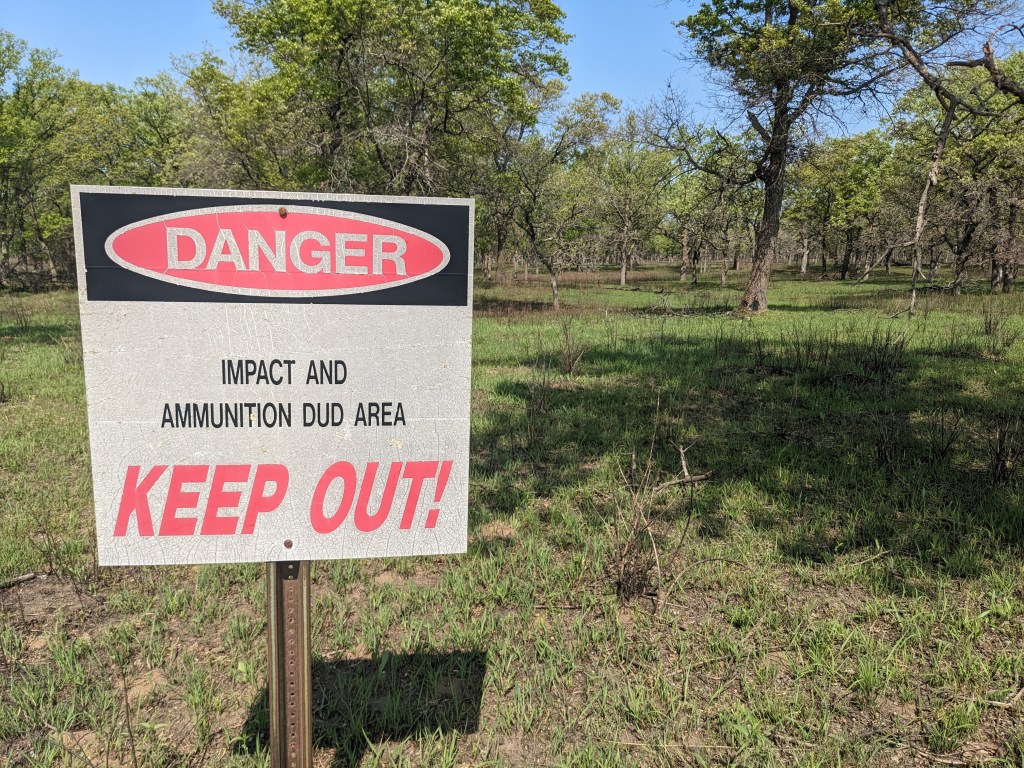
One of the sites we visited (pictured above) was one of the impact areas, which is essentially the chunk of land they shoot at during artillery training. I believe our guide said it was somewhere in the neighborhood of 1,000 acres. As you can see on the sign, you aren’t supposed to go into this area, and they’re serious about that. Not because of why you might think (going down range and all) but because of the risk of unexploded ordnance. They said that the area has been used like this since the 60’s and, back in the day, they didn’t keep track of what shells went boom and which ones didn’t. Therefore, nobody goes into this area. Not even to retrieve lost frisbees.
In this unit, wildfire is a significant risk. It turns out, when things explode, they sometimes catch other things on fire. Grass is especially susceptible to explosive-induced combustion. The guides had several amusing stories about soldiers shooting tracer rounds and ignoring the resulting wildfire they caused. Only later were the fires discovered and addressed. I really appreciate that level of indifference.
Instead of waiting for spring artillery to start wildfires, land managers conduct annual prescribed burns on the entirety of the area. I believe they said they have been burning every year, as early as they can, for 15 or so years, with the area being burned periodically before that for at least 30 years.
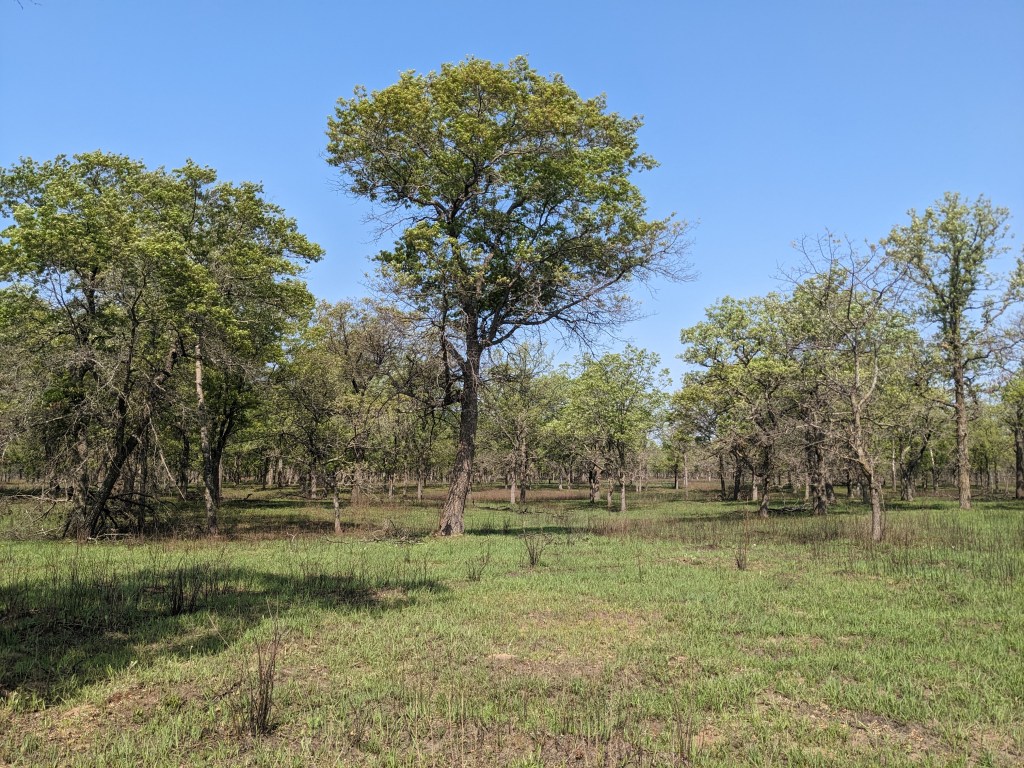
The outcome of all that annual burning is a shockingly good-looking oak savannah. It is open and sunny, just like you’d expect. Also, there’s no invasive understory like you might see in an unmanaged forest. There’s no telling what the plant diversity is, of course, because you can’t go in and look around. But, that’s kind of the point. There’s no management other than fire and it looks really good. Amazingly good, even.
It is quite the case study in the application of annual fire and unique management objectives. Camp Ripley in general, and how they use fire, is super interesting. I am looking forward to going back again.
 Jason E. Andersen
Leave a comment