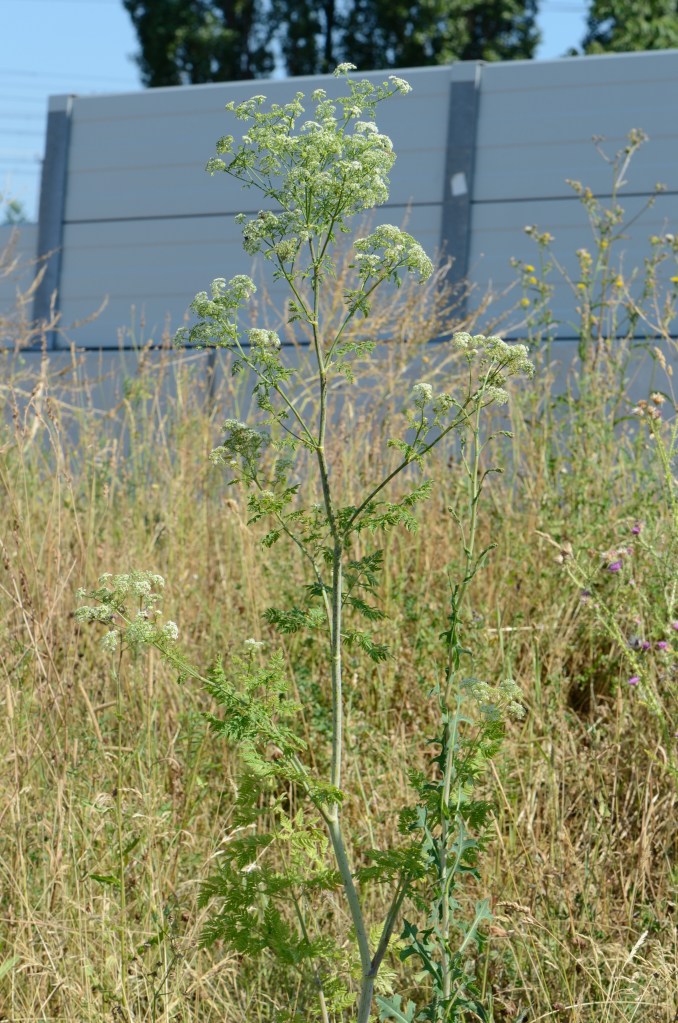
As part of my job, I have been mowing roadsides for poison hemlock this week. It’s not much, but it’s honest work.
Bonus Fun Fact: Poison hemlock (Conium maculatum) is a highly toxic, introduced plant found across the United States. The leaves, stems, and flowers (and, I assume, the roots as well) can all kill if ingested, even in small amounts. It’s the plant juices that are bad. They can cause blisters if the juice gets on your skin or can cause serious breathing problems if inhaled. Some people will develop rashes after merely touching the plant. It’s bad stuff.
It should be noted at this point that I mow hemlock from the comfort of an enclosed-cab tractor, with air conditioning.
Bonus Bonus Fun Fact: Socrates, the great philosopher of ancient Greece, was killed by hemlock poisoning. After being tried and convicted of corrupting youth with his ideas, he was forced to drink a tea made from poison hemlock.
Bonus Bonus Bonus Fun Fact: Poison hemlock was brought to North America from Europe in the 1800’s as a garden plant, being marketed as a ‘winter fern’. The first-year rosettes of the plant appear very lush and hold on to their greenness (is that a word?) through the winter and into the spring.
So, to recap, poison hemlock is a very toxic plant, known to be deadly since antiquity. Then someone had the bright idea to spread it to the wider world as a garden plant. Great job, humans!
 Jason E. Andersen
Leave a comment