The solar system has gotten a lot bigger since the last time I remember. I heard a thing on the news this weekend and then I went down a rabbit hole of internet while on the couch. You know how it is.
Bonus Fun Fact: The most distant known object in our solar system is 2018 AG37, commonly and aptly called ‘Farfarout.’ Farfarout’s orbit is an average of 132 AU from the Sun. If you need a refresher on measuring stellar distances, an Astronomical Unit (AU) is the average distance from Earth to the Sun, about 93 million miles. That’s quite a road trip! For a bit of perspective, Pluto, the lovable underdog dwarf planet, orbits at around 39.5 AU. This makes Farfarout quite far, far out.
Bonus Bonus Fun Fact: Before Farfarout was discovered, the previously most distant known object was Farout, orbiting at around 124 AU. I wonder if the next object will be Farfarfarout or maybe Fartherout. Scientists are funny.
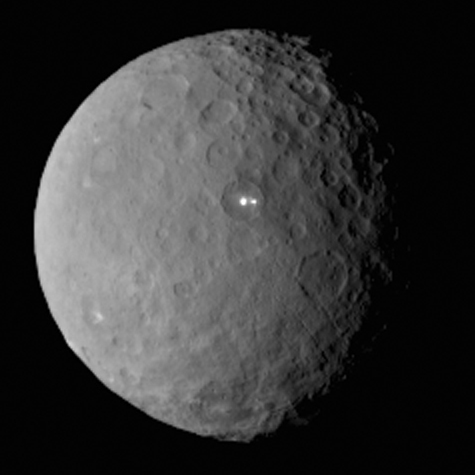
Bonus Bonus Bonus Fun Fact: There are currently five official dwarf planets in the solar system. Dwarf planets are planet-like bodies that have a spherical(ish) shape due to their gravity, but don’t have strong enough gravity to sufficiently pull or push other bodies out of its orbit, like larger planets do. You’re familiar with Pluto as a dwarf planet I’m sure, and there is also Ceres, Haumea, Makemake, and Eris. Ceres orbits between Mars and Jupiter in the asteroid belt and the rest orbit on the far reaches of the solar system, outside the orbit of Neptune.
 Jason E. Andersen
Leave a comment