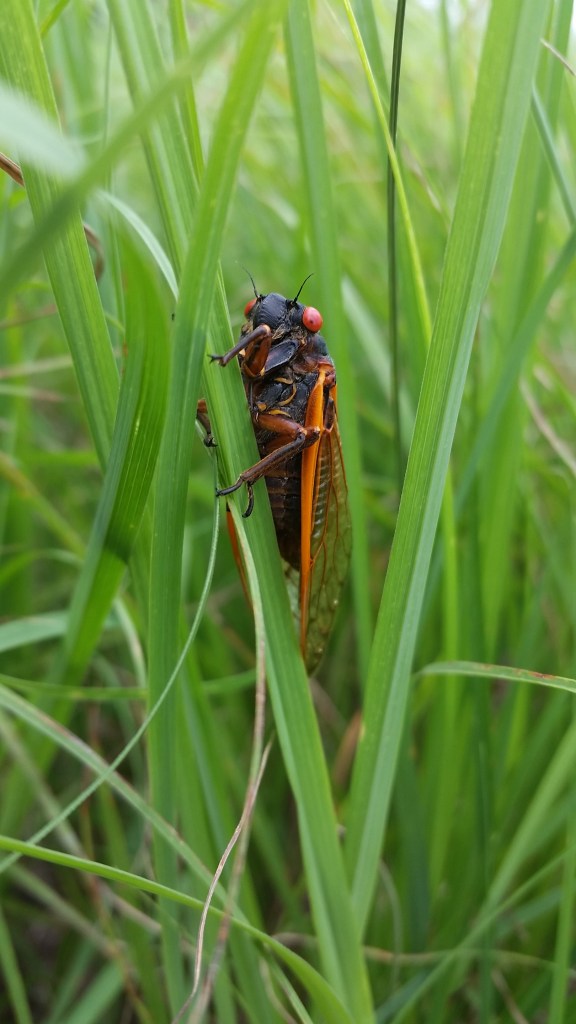
You may have heard on the news about the emergence of the Brood X, 17-year periodical cicada, that’s all the hotness this summer. Unlike their annual cicada counterparts, periodical cicada spend the vast majority of their lives underground, tunneling around and feeding on the sweet juices of tree roots. Every 2 to 17 years, depending on the species and/or brood, the soil-dwelling nymph will emerge and morph into an adult. The adults will take flight and sing their characteristic summer song, mate, lay eggs, and die. The cycle then repeats. Ah, nature.
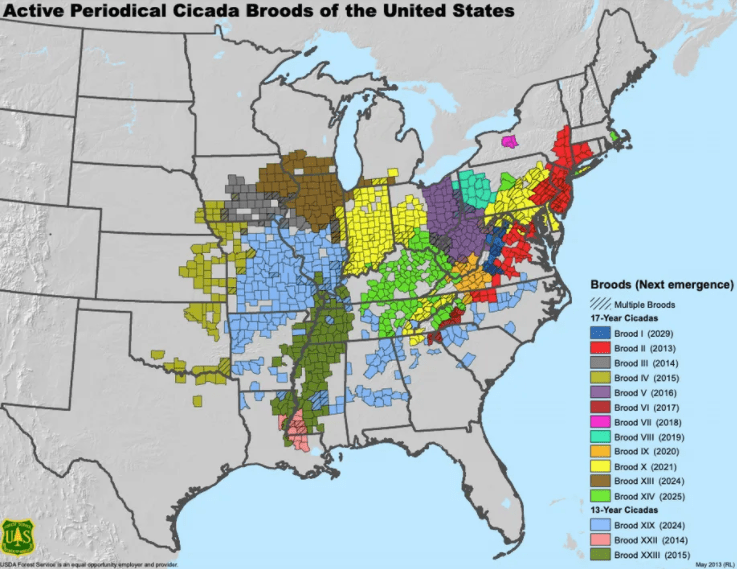
Bonus Fun Fact: Iowa won’t see another major emergence of 17-year cicada until 2031. Brood III, the Iowa Brood, last hatched in 2014, so it’ll be a little while before we hear our summer friends. Be sure to put it on your calendar. If you’re in eastern Iowa, you may catch some of Illinois’ Brood XIII emergence in 2024.
Here’s a pretty sweet map of the different 17-year cicada broods across the eastern US and Midwest. It was created in 2013 so the ‘next emergence’ years are a bit off. You can do the math though.
 Jason E. Andersen
Leave a comment