A week or so ago there was a group of turkeys in the office yard, doing their spring turkey thing. That is to say, the males were all fluffed up and had their tails spread on display. I took a really terrible picture on my phone to mark the memory:
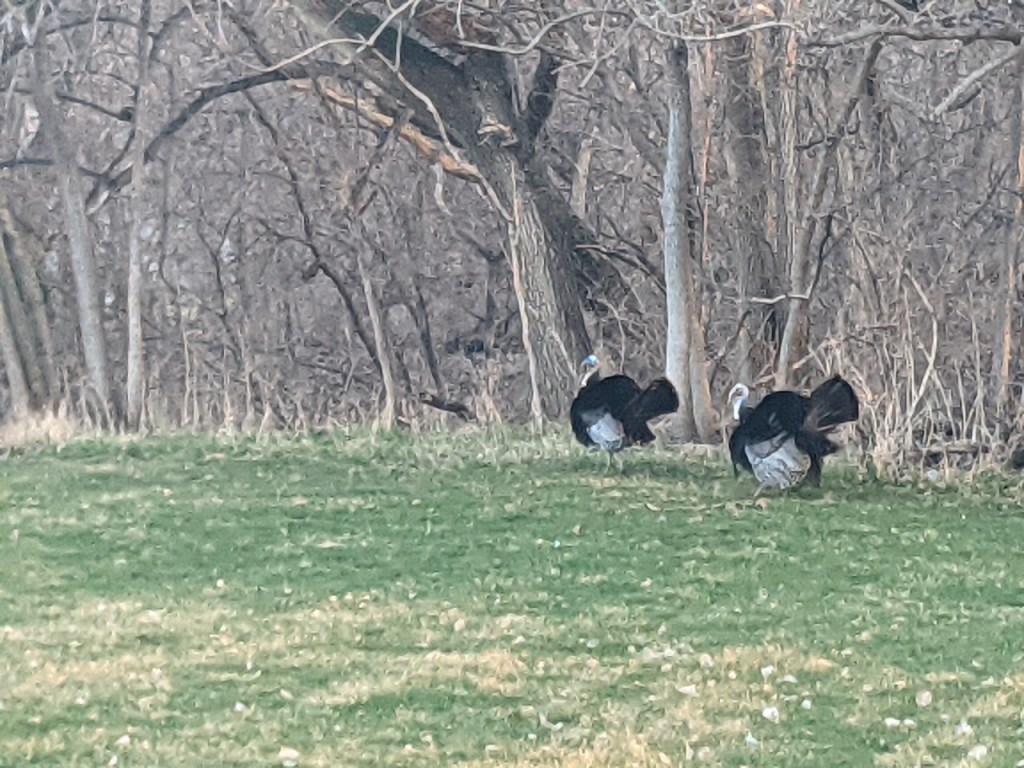
As I sat and watched, I noticed that they all had beards. Turkey beards, if you didn’t know, are patches of modified feathers (called mesofiloplumes) that grow from the center of the breast on turkeys. They look a lot like the coarse hair of a horse tail if you’re more familiar with that. They are not hair, but they do appear like hair, which is where the term beard comes from.
So, all the turkeys had beards. This begged the question, who were they displaying to, or were they just practicing?

Bonus Fun Fact: While male turkeys always have beards (although sometimes they may break off), female turkeys will also sometimes have beards. The beards of female turkeys will be shorter than their male counterparts with males having 6 to 10 inch beards while female beards, if present, will be half that length or less. This makes the presence or absence of a beard not a very good identifier for the sex of any particular turkey.
Bonus Bonus Fun Fact: A group of turkeys is called a rafter. A rafter of turkeys. The term comes from turkeys roosting in the rafters of barns.
 Jason E. Andersen
Leave a comment